
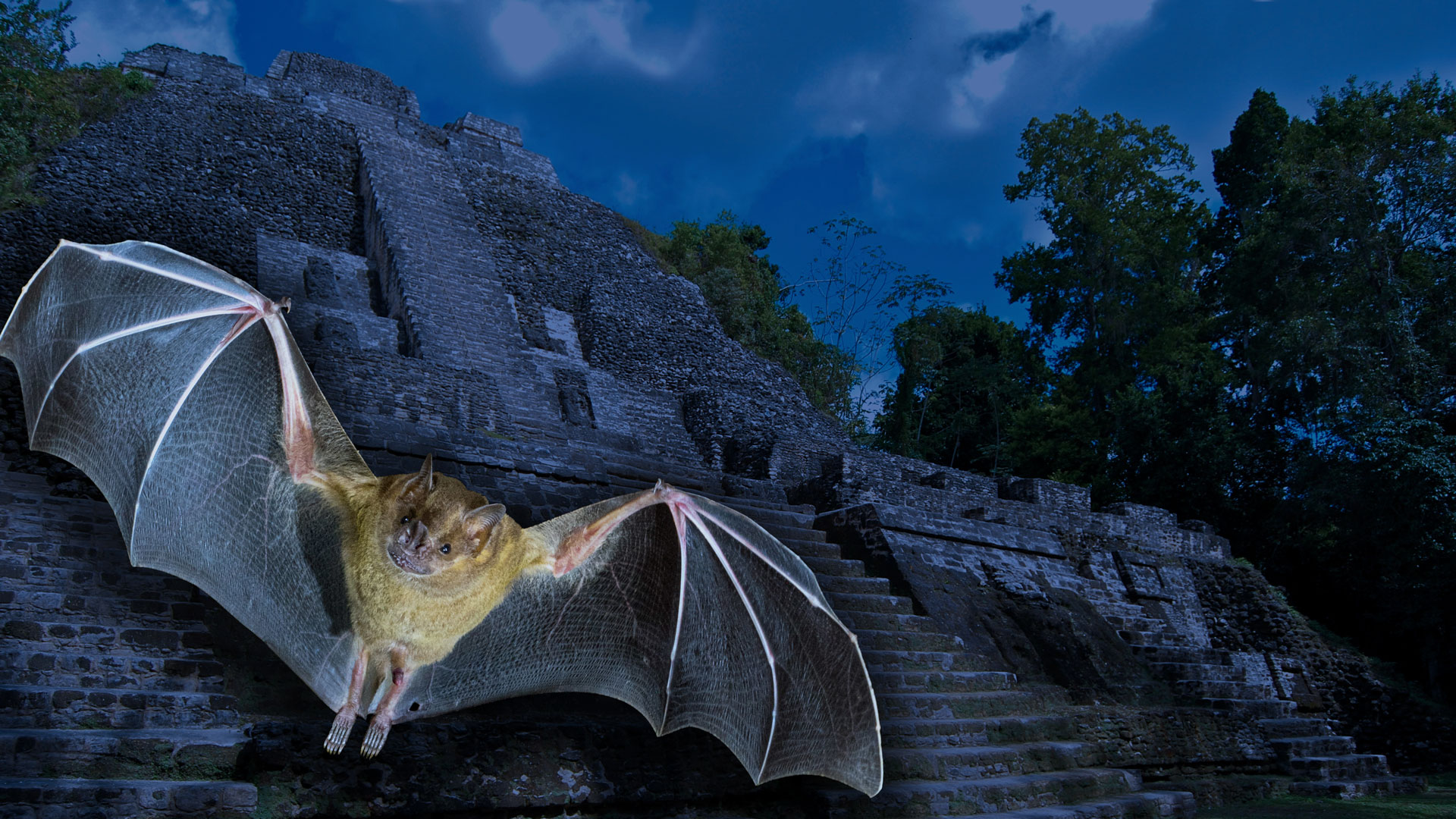
"I've always been very interested in animals that are misunderstood." — Gliselle Marin
When night falls over the Belizean jungle, colonies of bats begin to stir among the Mayan ruins — and that's the signal for the "bat girls" to start their own hunt, catching bats in mist nets. Leading the charge is Gliselle Marin, a young Belizean scientist with bats tattooed on her neck, who has made protecting her country's biodiversity, and the misunderstood creatures she loves, her life's work.
Bats roosted under the porch of the jungle home where she grew up, and it wasn't until she started talking to people from the city that she realized how unusual — and how feared — that upbringing had been.
Gliselle is one of the central figures in Empire of Bats, an hour-long documentary for CBC's The Nature of Things, hosted by Anthony Morgan, following an extraordinary research effort nicknamed the "Bat-a-thon." Each spring, researchers from around 50 institutions across two dozen countries converge on the ancient Mayan community of Lamanai for a two-week joint study of the dozens of bat species living there.
Founded and run by Canadian researchers, the Bat-a-thon has grown into an unmatched gathering — one that's uncovering not just the secrets of bats themselves, but clues to human health puzzles, from diabetes to infectious disease, that these animals may help solve.